The Version Nobody Publishes
Solo travel content tends to come in one of two flavours: the breathless highlight reel of sunsets and spontaneous adventures, or the anxious safety checklist. Both are real, but neither fully prepares you for the actual experience of travelling alone for the first time — which is stranger, richer, and more complicated than either version suggests.
This is the more honest account. The things that are genuinely wonderful, the things that are harder than expected, and the practical realities that experienced solo travellers know but rarely lead with.
The Freedom Is Real — and Initially Disorienting
The first thing most first-time solo travellers notice is how real the freedom is. Nobody to negotiate with about where to eat, how long to spend in a museum, whether to take the scenic detour. Every decision is yours. It is liberating in a way that group travel simply cannot replicate.
What fewer people mention is that absolute freedom is briefly paralysing. When you arrive in a new city alone with no plan and no one to defer to, the first few hours can feel surprisingly unmoored. This is normal and passes quickly — usually by the time you have eaten something and navigated to wherever you are staying. But knowing to expect it prevents you from misinterpreting the initial disorientation as a sign that solo travel is not for you.
You Will Talk to More People, Not Fewer
The most consistent finding among people who travel both solo and in groups is that they meet far more people when they travel alone. This is partly structural: when you are in a group, you are socially complete. Other travellers and locals see a closed unit and do not approach. When you are alone, you are approachable, and you are more likely to initiate conversation because you are not already engaged with a companion.
Hostel common rooms, long train journeys, communal tables at restaurants, and organised day tours are all environments where conversations start naturally. Some will be brief and forgotten. Some will turn into day-long adventures with strangers who become, at least briefly, important parts of the trip. The randomness of these encounters is one of the things solo travellers most consistently cite as irreplaceable.
The Loneliness Is Also Real
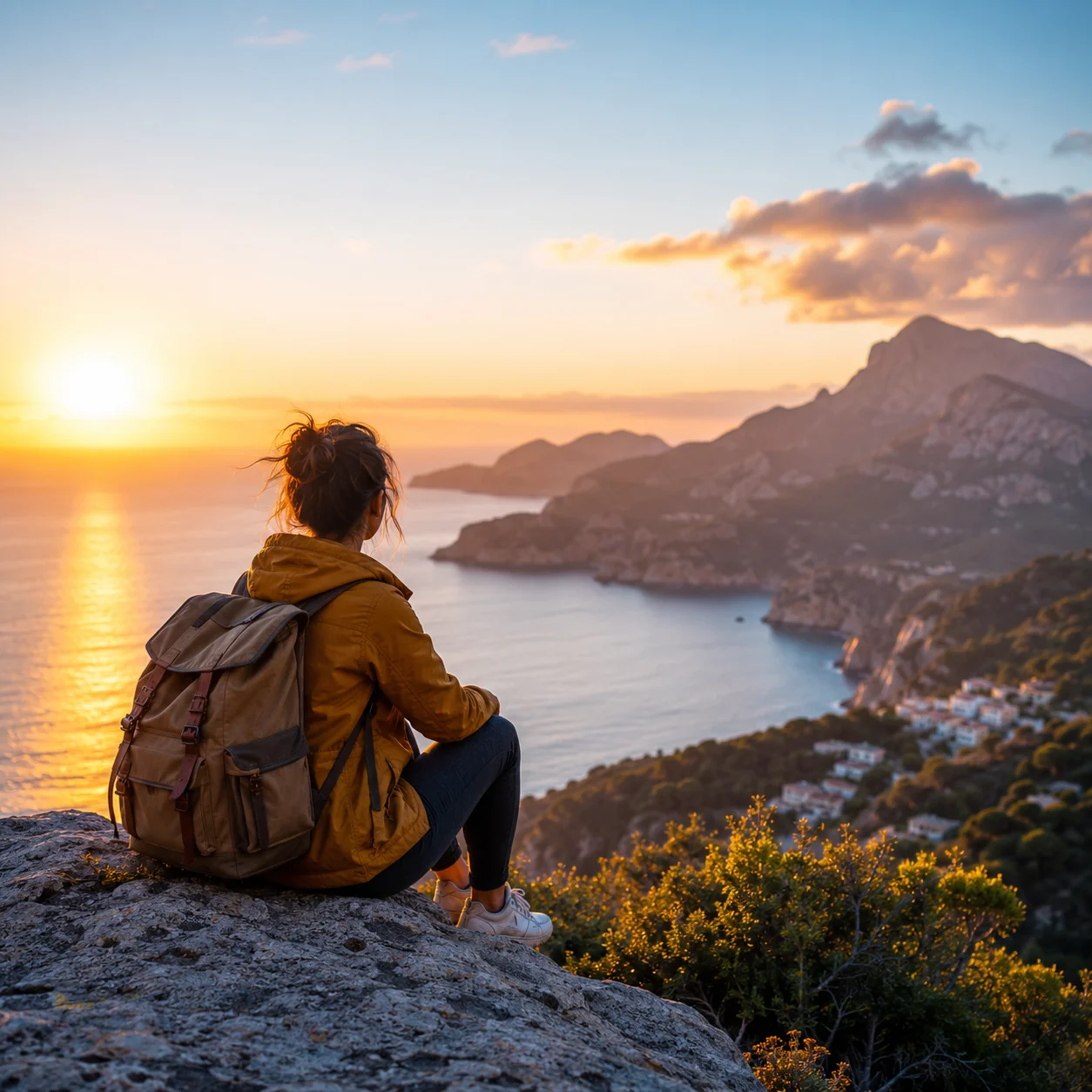
It would be dishonest to write about solo travel without acknowledging that loneliness is part of it. Not constant, and not for everyone, but present — usually at specific moments rather than as a sustained state. A spectacular sunset with no one to share it with. A meal at a table for one when the restaurant is full of couples and groups. An experience so good you want to describe it to someone right now and there is no one immediately available.
Experienced solo travellers learn to make peace with these moments and find that they have their own particular quality — something between solitude and wistfulness that is not entirely unpleasant. But they are part of the honest picture, and going in expecting only freedom and connection will leave you unprepared for the quieter stretches.
Safety: The Realistic Version
Most solo travel safety advice is either too generic to be useful or too alarming to be accurate. A more realistic picture:
- The vast majority of solo travel is uneventful in the way that matters most — you do not get seriously hurt or robbed. Most of the world is considerably safer for travellers than media coverage and anxious relatives suggest.
- The risks that do materialise are usually low-level: petty theft, scams targeting obvious tourists, getting stranded due to missed transport, or minor medical issues. All of these are manageable with basic preparation.
- Share your itinerary with someone at home who will notice if you go silent. Keep digital copies of important documents. Have your bank's international emergency number saved. Know the local emergency number. These are not burdensome precautions — they are five minutes of preparation that cover a large proportion of realistic scenarios.
- Trust your instincts. If a situation or person feels wrong, the social awkwardness of extracting yourself is a small price. Your discomfort is information. Act on it.
The Practical Realities That Catch People Out
- Solo supplements are real and annoying. Many tours, cruises, and some accommodation options charge a single traveller more per person than couples or groups pay. Factor this into your budget, or seek out solo-traveller-friendly accommodation and group tours where you share costs with other individuals.
- Meals can be more expensive than expected. Cooking for one, ordering a full meal, and the social cost of eating at a table for one at fancier restaurants adds up. Street food, markets, and hostel kitchens are your friends.
- You will spend more time alone than you expect. Even on a socially active trip, the hours add up. Comfort with your own company — and a few things you enjoy doing alone, whether that is reading, journalling, or wandering without a destination — makes the difference between enjoying those stretches and enduring them.
- Decision fatigue is a real thing. Making every single choice, all day, every day, without sharing the cognitive load is more tiring than it sounds. Building in some low-decision days — a long train journey, a beach afternoon, staying put in one place — is worth it on longer trips.
What Changes After the First Trip
Almost everyone who travels solo for the first time notices something shift by the end of it. The combination of navigating unfamiliar environments independently, making decisions entirely for yourself, and managing whatever small challenges arise produces a specific kind of quiet confidence that is hard to develop any other way.
It is not bravado. It is the more durable knowledge that you are more capable than you gave yourself credit for, that most situations are manageable, and that the world is more welcoming to a person travelling alone than anxiety had suggested it would be.
That shift is, more than the destinations themselves, the thing most solo travellers carry home.