What Is Reaction Time?
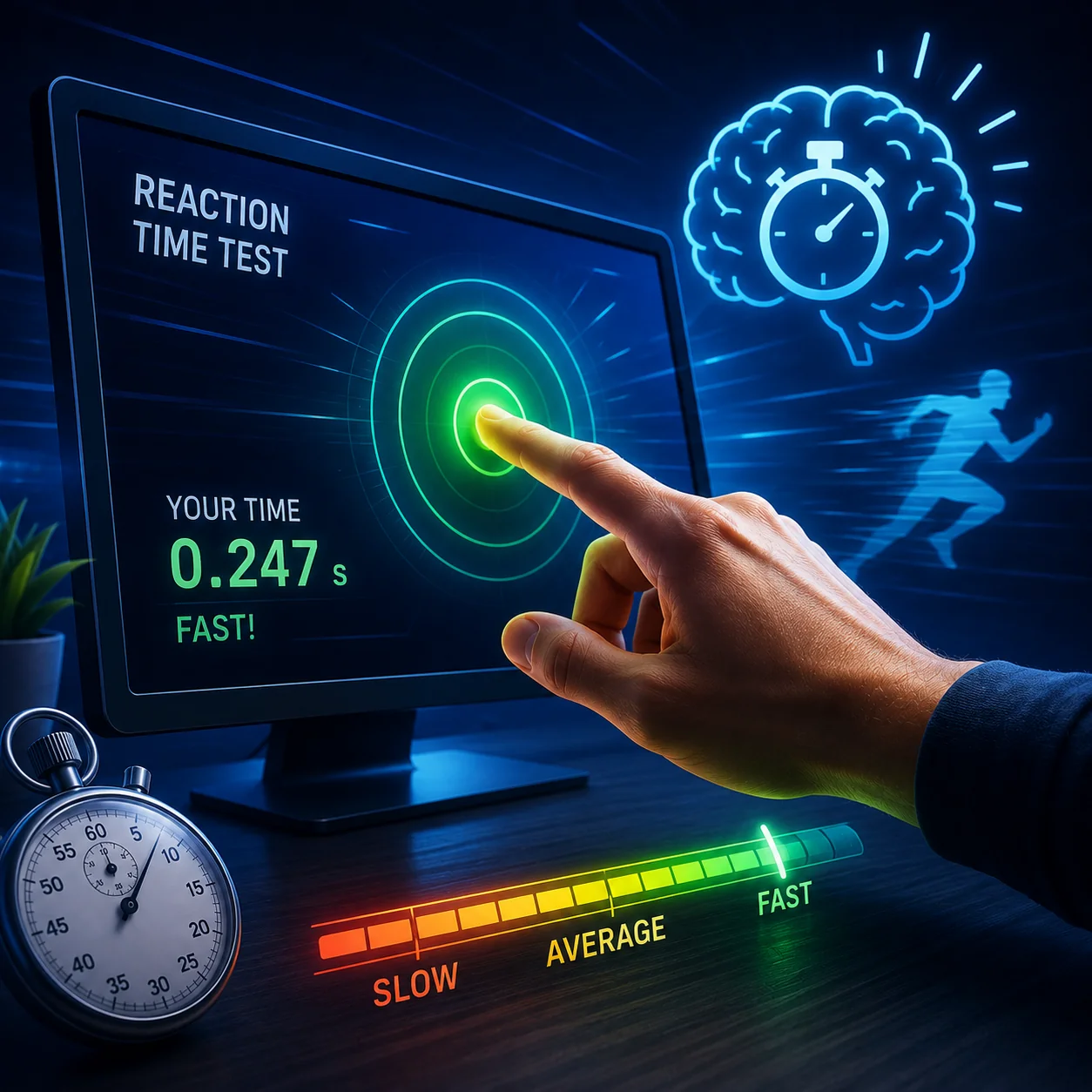
Reaction time measures the gap between a stimulus appearing — like a screen changing color — and your physical response to it, such as a click or key press. It's typically measured in milliseconds (ms), and even small differences matter: 50ms can separate an average reflex from a genuinely fast one. Reaction time is one of the most studied measures in cognitive psychology because it offers a simple, quantifiable window into how quickly the brain processes a signal and triggers a motor response.
There are actually a few different types of reaction time tests. Simple reaction time — like the color-change test most online tools use — measures response to a single, expected stimulus. Choice reaction time, which is more complex, measures how long it takes to choose between multiple possible responses, and is generally slower since it involves an extra decision-making step.
Average Human Reaction Time
For a simple visual stimulus, most people react somewhere between 200 and 250 milliseconds. Here's how that breaks down across different groups:
- 200–250ms — Typical average adult reaction time for a simple visual stimulus under normal, alert conditions.
- 150–180ms — Common among trained athletes, especially in sports that depend heavily on fast-twitch response, like sprinting starts or racket sports.
- Under 150ms — Rare, often seen in competitive gamers who train reflexes specifically through repetitive practice in fast-paced games.
It's worth noting that reaction time to sound is typically a touch faster than to visual stimuli — auditory signals tend to reach the brain's processing centers slightly quicker than visual ones, which is part of why some reaction-based sports cues rely on sound (like a starting gun) rather than a visual signal.
What Affects Your Reaction Time?
Reaction speed isn't fixed — it fluctuates based on several everyday factors:
- Age — Reaction time generally peaks in your late teens to twenties and gradually slows afterward, though the decline is gradual and barely noticeable year to year.
- Sleep — Sleep-deprived individuals can react 10–15% slower than well-rested ones. Chronic sleep deprivation has effects on reaction time comparable to mild alcohol impairment in some studies.
- Caffeine — Can provide a short-term boost to alertness and reaction speed, though effects vary significantly by person and by tolerance level.
- Fatigue and stress — Both measurably slow down response speed, partly because mental fatigue reduces the efficiency of attention and signal processing.
- Practice and familiarity — Repeated exposure to a specific test or stimulus type genuinely speeds up your response, since your brain begins to anticipate the pattern.
Why Does Reaction Time Matter?
Beyond gaming and curiosity, reaction time has real practical relevance. It's used as a screening measure in some sports performance assessments, studied in driving safety research (since brake response time directly affects stopping distance), and even tracked in some clinical and aging studies as a simple, non-invasive marker of cognitive processing speed.
How to Improve Your Reaction Time
- Get consistent, adequate sleep — this has one of the largest measurable effects on reaction speed, more so than most supplements or training methods.
- Practice reaction-based games or drills regularly; reflexes genuinely respond to training, similar to how any other motor skill improves with repetition.
- Stay physically active — regular cardiovascular exercise is linked to faster neural response times in multiple studies, likely due to improved blood flow and nervous system efficiency.
- Limit distractions while testing — divided attention measurably slows reaction time, so testing while multitasking will give you an artificially poor result.
- Test yourself periodically under similar conditions to track whether your training is actually working, rather than comparing a tired evening attempt to a well-rested morning one.
Test Your Reflexes
Want to see exactly where you stand? Try the free Reaction Time Test and get an instant, accurate measurement of your reflexes in milliseconds, with a running history so you can track whether your average improves over multiple attempts.