The Largest Earthquake in Japan's Recorded History
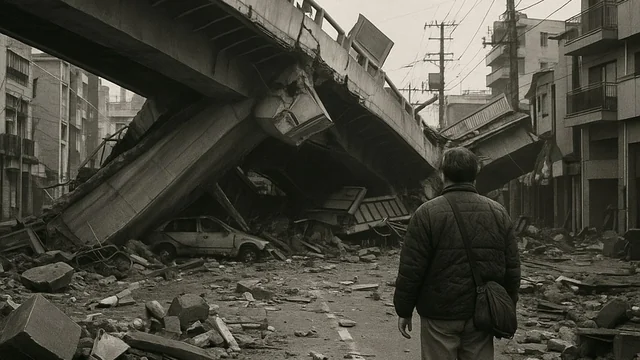
At 2:46 in the afternoon on March 11, 2011, a magnitude 9.0 earthquake, the most powerful ever recorded in Japan's history and among the five most powerful ever measured anywhere on Earth, ruptured along the subduction zone off the country's northeastern Tohoku coast. The earthquake itself, despite its extraordinary power, caused comparatively limited direct damage in most areas thanks to Japan's world-leading earthquake-resistant building codes and its sophisticated earthquake early warning system, which provided many residents with a crucial, if brief, window of seconds to minutes of advance notice before the most intense shaking arrived. The catastrophe that followed came instead from the sea.
A Wave That Overwhelmed Every Defense
Within roughly thirty to forty minutes of the earthquake, a tsunami with waves reaching as high as 40 meters in some coastal locations, though generally ranging from 10 to 15 meters across most of the severely affected coastline, struck Japan's northeastern shore with devastating force, overwhelming seawalls and coastal defenses that had, in many cases, been specifically engineered based on historical tsunami records that proved significantly smaller than what actually occurred that day. The wave swept miles inland in some low-lying coastal areas, destroying entire towns, sweeping away ships, vehicles, and buildings, and ultimately killing approximately 18,500 people, with the vast majority of deaths attributed directly to drowning in the tsunami itself rather than to the earthquake's initial shaking.
A Second Catastrophe Unfolds at Fukushima
Compounding the earthquake and tsunami's already catastrophic toll, the tsunami's floodwaters overwhelmed the seawall and backup power systems at the Fukushima Daiichi Nuclear Power Plant, disabling the cooling systems required to keep the facility's nuclear reactors safely stable. Over the following days, three of the plant's reactors experienced partial nuclear meltdowns, along with hydrogen explosions that damaged reactor buildings and released significant quantities of radioactive material into the surrounding environment, triggering the most severe nuclear accident since the 1986 Chernobyl disaster in Soviet Ukraine and prompting the evacuation of well over 150,000 residents from the surrounding exclusion zone, many of whom would not be able to return to their homes for years, and in some heavily contaminated areas, remain unable to return even more than a decade later.
A Nation's Response, Tested and Studied
Japan's response to the combined earthquake, tsunami, and nuclear disaster drew significant international attention and, on balance, considerable praise for the speed and coordination of the country's search and rescue efforts, disaster relief logistics, and public order maintenance under extraordinarily difficult circumstances, even as the nuclear crisis at Fukushima generated substantial and lasting criticism of the plant operator, Tokyo Electric Power Company, and Japanese nuclear regulatory authorities regarding pre-disaster safety planning that had reportedly underestimated the region's realistic worst-case tsunami risk despite some internal warnings raised in the years before the disaster occurred.
Rebuilding an Entire Coastline
The reconstruction effort following the disaster involved not merely rebuilding destroyed towns but, in many cases, fundamentally reconceiving coastal land use policy across the entire affected region, including the construction of new, substantially higher seawalls, in some locations reaching over ten meters, alongside policies relocating residential construction to higher ground away from the most tsunami-vulnerable coastal lowlands. This reconstruction effort, still ongoing in various forms more than a decade after the disaster, has generated its own significant debate within Japan regarding the appropriate balance between maximizing physical protection through massive engineered barriers and preserving the traditional coastal fishing communities and lifestyles that some residents feel the towering new seawalls have permanently and unnecessarily altered.
A Disaster That Reshaped Global Nuclear Policy
Beyond Japan's borders, the Fukushima nuclear accident prompted a substantial global reassessment of nuclear power safety standards and risk tolerance, with Germany announcing a complete phase-out of its domestic nuclear power program in direct response to the disaster, and numerous other countries implementing more rigorous safety reviews and, in some cases, extended moratoriums on new nuclear construction. More than a decade later, the 2011 Tohoku earthquake and tsunami remains a defining reference point in discussions of natural disaster preparedness, nuclear safety policy, and the sobering reminder that even one of the world's most earthquake-prepared nations can still be overwhelmed when a disaster significantly exceeds the historical worst-case scenarios that existing infrastructure and planning were originally designed to withstand.